

The lead story this morning on one of Oahu’s most trusted news sources, Civil Beat, is about the campaign Hawaii’s tourism executives are leading to convince residents that the return of visitors is imperative for Maui’s recovery.
The story focused on a webinar, attended by nearly 70 local reps, entitled “Restoring Tourism After Disaster,” hosted by a former New Orleans tourism executive who led the city’s tourism recovery after Hurricane Katrina.
It also highlighted several local campaigns and their messaging to bring visitors back to Maui, including efforts by Hawaiian Airlines and the Hawaii Tourism Authority, as well as how to deal with backlash, which is “inevitable,” the executive explained.
“There are going to be people who hate your guts no matter what, and you’re not going to change that,” the New Orleans executive told her Hawaii-based attendants.
You should read the story in its entirety, but the gist of it is a message we often see in tourism recovery. Residents are told by tourism executives: I know you are suffering, because I am too, but if we don’t get the economy going again, you will suffer even more, believe me.
Of course, the quiet part they don’t say out loud at the end is that their job depends on it, but fair enough – Maui’s economy is indeed currently based on tourism and, though it’s difficult to estimate how much tourism revenue stays in the state given all the national and international chains that operate in Hawaii, it’s safe to say that the return of tourism could help ease some economic woes, including those of small and local businesses.
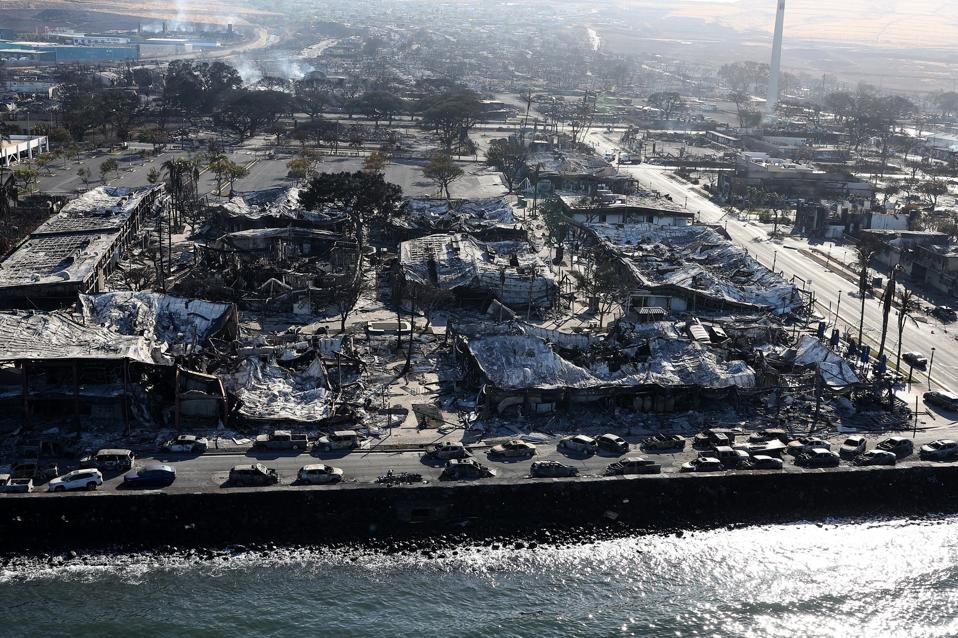
But is a “return to normalcy” what Lahaina residents want? After all, they are the victims in this disaster, the ones who lost their homes and their loved ones – 2,000 structures and 97 people in total. And it’s not like things were peachy keen before: Hawaii’s struggles with tourism have been well documented.
Anyone who watched or attended the Maui City Council meeting yesterday knows that many people want change. Hundreds of residents showed up to push back against the reopening of tourism, many calling it too soon in light of more important local issues, like schooling and long-term housing.
“We are not ready for the tourists to come back right now,” said Naiwi Teru, a Lahaina resident. “You’re going to spit the tourists in front of us before the keiki (kids) go back to school, it’s really, really demoralizing. And that’s why we [are] angry.”
Some concerns seemed to be addressed earlier in the day when Maui’s Mayor Richard Bissen broke with Hawaii’s governor and announced a plan for a phased reopening of West Maui, instead of the all-at-once reopening previously planned for October 8th.
But residents also articulated their long-term goals at the meeting. Specifically, they said that they want the city to value other things beside tourism going forward as Lahaina is being rebuilt, now that it has a chance to redefine itself.
They’d like to see Lahaina rebuilt with less accommodations for visitors, more open space, and with a focus on traditional agricultural practices, so food production can once again be community-focused.
Gee, imagine that. Will the tourism industry agree, or at least meet them halfway?
We’ll get to see that battle play out in due time, for sure. But what should encourage Lahaina residents is that other areas in Hawaii have been redefined post-disaster, with local needs and concerns being addressed head on.
One great example is the north shore of Kauai. Local residents had long complained about overcrowding, environmental damage, and loss of quality of life due to tourism. After the area was devastated by floods in 2018, it closed for 14 months (!) and reopened with a brand-new management system that has helped reduce the impact of overtourism.
With strong leadership from tourism executives that put residents first, including Sue Kanoho, Executive Director of the Kauai Visitors Bureau, the north shore of Kauai was able to restore power to locals. It may not be perfect in everyone’s eyes, but the system is much better than it was before, and residents, at least, felt like they were heard.
Will Maui provide Lahaina the same chance? The opportunity is certainly there.