

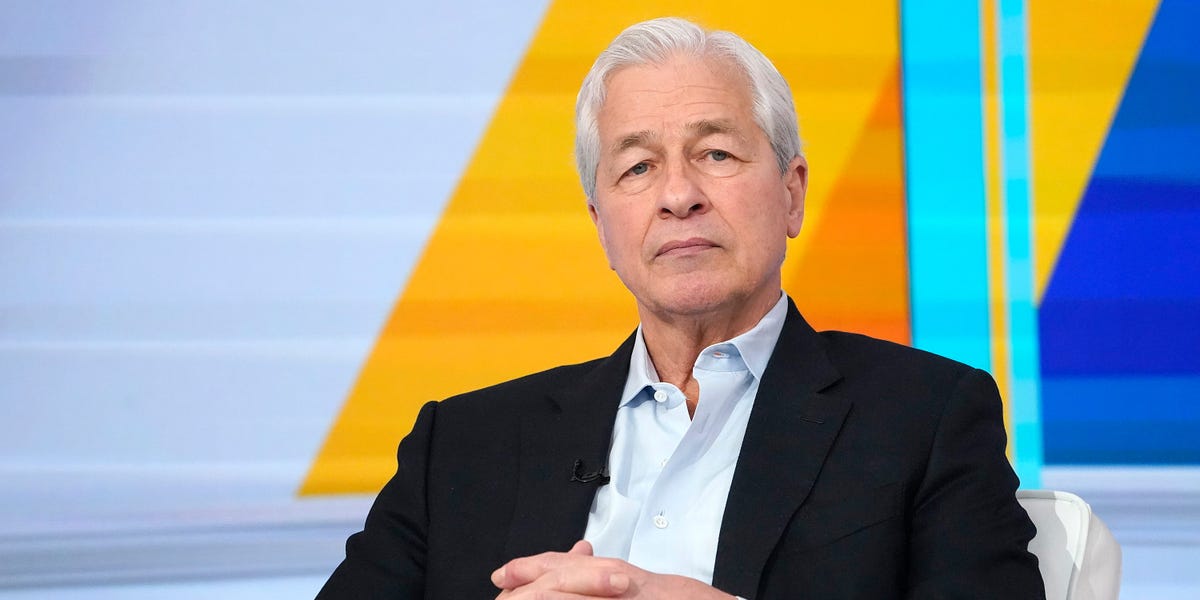
Jamie Dimon is back with another animal metaphor — this time, a warning about a “skunk at the party” for the economy.
The JPMorgan CEO warned in his annual letter to shareholders, released on Monday, that inflation could be rising instead of continuing to fall.
“The skunk at the party — and it could happen in 2026 — would be inflation slowly going up, as opposed to slowly going down,” he wrote.
He warned that this outcome would lead to higher interest rates than markets expect, acting like “gravity” to pull down asset prices.
If asset prices fall, he warned, consumer sentiment about the economy can fall with them — “and cause a flight to cash.”
In his 46-page missive, Dimon outlined that while the economy is more resilient than in the past, there are many potential risks, like rising oil prices, that can come together to cause a “tipping point.”
He noted structural shifts, which he compared to moving tectonic plates, that threaten to keep inflation and rates “stickier” for longer. He also said the wars in Ukraine and Iran impact nations far beyond their borders, namely in terms of energy prices.
A spike in energy prices ripples beyond the price of a barrel of oil, he warned, affecting related commodities such as fertilizer and helium. The interconnected nature of the global supply chain is already causing disruptions in industries from shipbuilding to food, he said.
“The outcome of current geopolitical events may very well be the defining factor in how the future global economic order unfolds — then again, it may not,” Dimon wrote.
Trade is another area of geopolitical unpredictability. Dimon warned that though US tariffs didn’t hit inflation hard, the trade battles are ongoing. He said it’s difficult to predict the long-term impacts of the “realignment of economic relations.”
Boosts for the economy
Dimon outlined a number of meaningful tailwinds, like the Donald Trump administration’s One Big Beautiful Bill, which JPMorgan’s economists say will inject another $300 billion into the economy, and the AI spending spree driven by Big Tech hyperscalers. While those might contribute to inflation, policies like deregulation should be “modestly deflationary.”
Back in October, Dimon warned of risks in private credit, saying, “When you see one cockroach, there are probably more,” referring to bankruptcies that raised concerns about the fast-growing, opaque market.
In his letter, Dimon said the sector is unlikely to pose a systemic threat on its own. But when a credit cycle comes, losses on all leveraged lending would be higher than expected because credit standards “have been modestly weakening pretty much across the board.”
Dimon also used the letter to highlight several initiatives JPMorgan has recently rolled out, including a sweeping “American Dream” effort to expand access to economic opportunity and a $1.5 trillion plan to finance industries tied to national security and supply chains.
“Growth is part of the solution to almost all of our problems,” he wrote.