

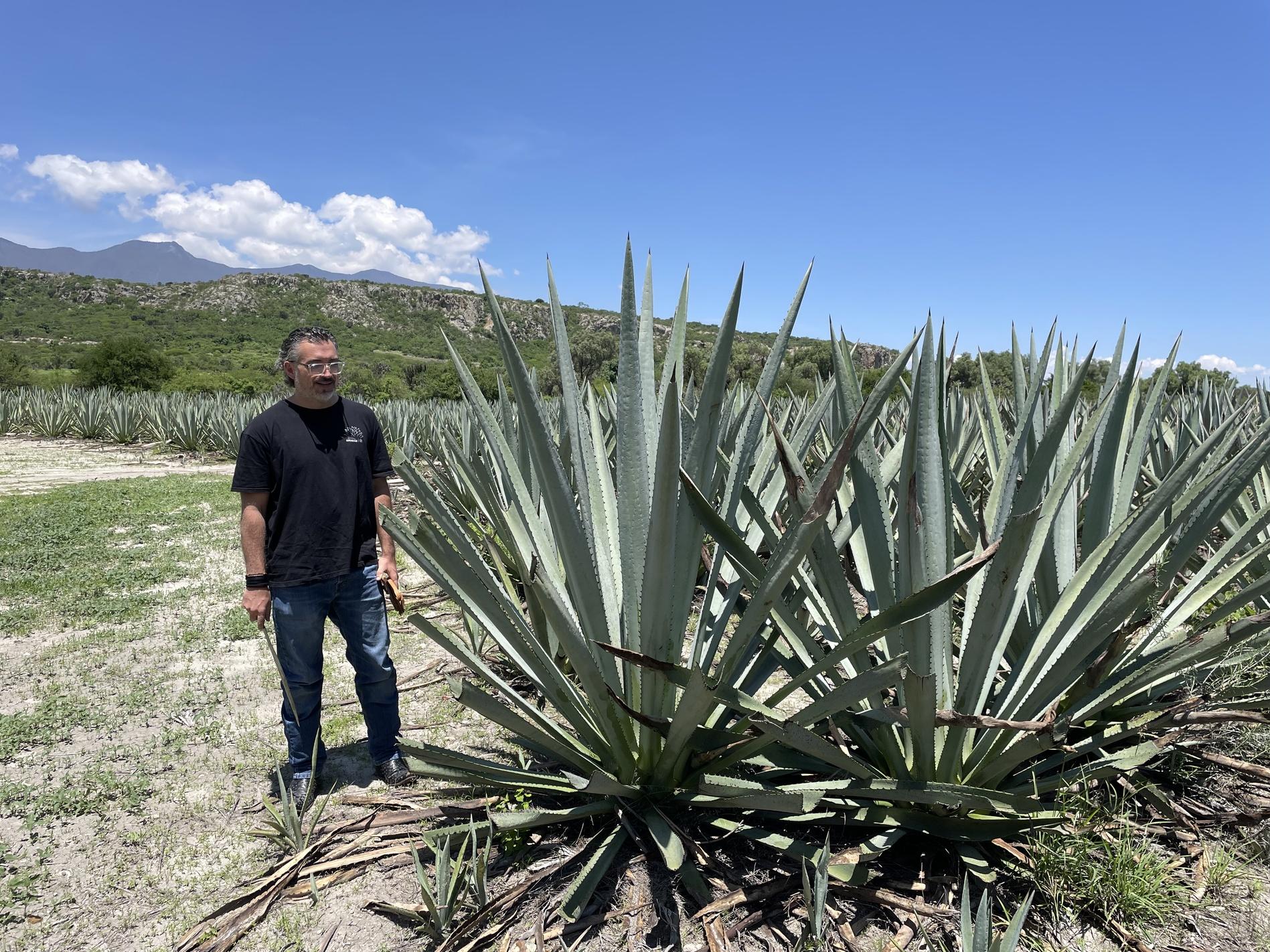
Mezcal is surely the most terroir-driven of all distillates. The personalities of individual agave species, the influence of distinct microclimates, and the spirit’s inherent place within Mexican culture have fuelled sustained consumer interest over the last 20 years. While the category remains far smaller than Tequila, it continues to expand steadily.
The global market size was valued at USD 1,121.73 million in 2024 according to Fortune Business Insights, and projections expect around 10% annual growth into the next decade. It’s clearly a success story, but the challenges of its continued expansion are becoming problematic.
For a drink defined by its authenticity, and at the premium end by its scarcity, the greatest risk now lies in losing the very conditions that make its production possible. Agave plants, the raw material for mezcal, can and do take many years to mature, leaving farmers exposed to volatile price swings and unpredictable demand.
In Mexico’s nine mezcal producing states several rare wild species that contribute to regional biodiversity are at risk of disappearing. Wild harvesting, reduced flowering, and declining bat pollinators all limit natural regeneration, leaving slow-maturing agave species particularly exposed to long-term biodiversity loss.
Given that 85% of mezcal production takes place in the state of Oaxaca, the industry’s impact is increasingly under scrutiny. It is thought that expanding agave cultivation has driven more than 60% of recent forest loss in key valleys, with nearly 35,000 hectares disappearing over the last three decades as mixed landscapes give way to monoculture.
For Luis Niño de Rivera, co-founder of Mezcal Amarás, sustainability is a structural necessity. He argues that the industry must confront its economic realities head-on. Agave prices, he notes, are currently low and likely to remain suppressed for several years. The market is notoriously unstable; the plant’s long maturation period means supply cannot quickly adjust to rising or falling demand, causing cyclical price spikes and crashes.
This instability affects not only producers’ livelihoods, but also the long-term health of the land. If farmers cannot rely on fair, predictable income, planting slower-growing or wild agave species becomes untenable, accelerating the loss of biodiversity by encouraging monoculture.
Rivera maintains that pricing is central to addressing the issue. “A fair price means ensuring producers cover their transformation costs and earn a stable margin, regardless of where agave sits in its price cycle,” he says. In his view, the volatility of raw material costs should not dictate the financial security of growers or the continuity of traditional methods. Without stable income, the ecological diversity that defines mezcal is at risk of collapsing into monoculture.
Amarás was founded by Santiago Suarez and Luis Niño de Rivera in 2010 on three key pillars – community, terroir, and a deep respect for the land – and the company aims to show what these values look like in practice. Rivera describes a model built on continual reinvestment: “We are always looking to generate prosperity with different initiatives and ways of working.”
Central to this approach is a sustained commitment to biodiversity. The company plants more than sixteen agave species across Oaxaca, Guerrero and Durango using biological methods with zero deforestation, and reuses distillation byproducts such as agave fibres to improve soil health.
At the time of writing, Amarás had planted 24,600 agaves and established a nursery in Oaxaca where previously uncultivated species, such as Chuparosa, Lumbre, and Coyote Lyoba, are being grown successfully. “We have planted more than thirteen species and subspecies besides Espadín,” Rivera says. “On average, we plant seven agaves for every one we harvest.”
Environmental responsibility extends further. Amarás has offset its carbon emissions since 2018, becoming the first carbon-neutral mezcal company. Through its partnership with the World Wildlife Fund, the business invests in forest conservation, soil regeneration and water management projects, including nano-ponds, dry toilets, and rainwater collection systems.
The company relies exclusively on biological treatments for agave growth, avoiding chemical pesticides. While these methods can slow plant development or increase vulnerability to pests, Rivera argues that the resulting agaves yield more expressive spirits with greater aromatic complexity.
As mezcal’s profile grows internationally, the industry continues to face social pressures alongside ecological ones. These include unstable income for agave farmers, uneven distribution of profits within the supply chain, and the risk of losing traditional knowledge as younger generations leave rural mezcal-producing communities.
Amarás seeks to address this through technical support and shared knowledge. The company hosts two annual events for current and future maestros mezcaleros, providing research, training, and opportunities to discuss improvements across each stage of production. Rivera cites one success story in which two communities requested deeper training in natural yeast inoculation developed from their own fermentations; implementing the method increased alcohol levels and shortened fermentation times.
“We empower as many people as we can through our vertically integrated model – agave growers, maestros mezcaleros, communities, suppliers, artists and workers,” he says. Building trust, he notes, ensures smoother transitions during inevitable market contractions. “Ultimately, if you give workers the right tools and training, and as close to income certainty as possible, then you’ll make progress.”
The Tequila sector provides sets a cautionary precedent. According to Agave Spirits by Gary Paul Nabhan and David Suro Piñera, Jalisco once supported around sixteen agave species; today, only eight remain. Rapid expansion led to monoculture, chemical dependency, diminished biodiversity and uneven economic benefits for growers. Mezcal risks a similar path if “community” is reduced to a marketing platitude, rather than tangible, measurable practices. With many brands managed from outside Mexico, genuine engagement is often replaced by symbolic and throw away gestures soundbites.
The mezcal trade remains heavily export-driven, with roughly three-quarters of production destined for the United States. For years, familiarity with the spirit outside Mexico came primarily from the Mexican diaspora, but that is changing rapidly. There are now specialist Mezcalaria bars all over the world.
Global demand is a thirsty beast though, and expansion brings further risk. Shortcuts become tempting, and the pressure for volume can overshadow the cultural and ecological foundations that make the category distinctive. While no approach is perfect, Amarás is showing that you can build a business in the category with restraint and respect; that you can achieve a great deal with the simple philosophy of putting in more than you take out. Footprints will be left, but terroir and heritage can and must be preserved.