

At dawn in the Alentejo, the fields glow gold and the air hums with cicadas. Men with axes move through the cork oaks, slicing into the bark with surgical precision. The first strike is quiet, followed by a subtle cracking sound as the bark loosens, revealing the living orange beneath. It is a centuries-old ritual that transforms bark into one of the most sustainable materials on earth.
Cork has always been more than a material in Portugal. It is part of the landscape, economy, and cultural identity. The cork oak, Quercus suber, is so vital that it is legally protected; cutting one down without permission is forbidden. Portugal produces around 50 percent of the world’s cork, with 730,000 hectares of cork forests, generating roughly €1.2 billion annually and supporting over 8,000 direct jobs, with thousands more in related tourism, gastronomy, and logistics.
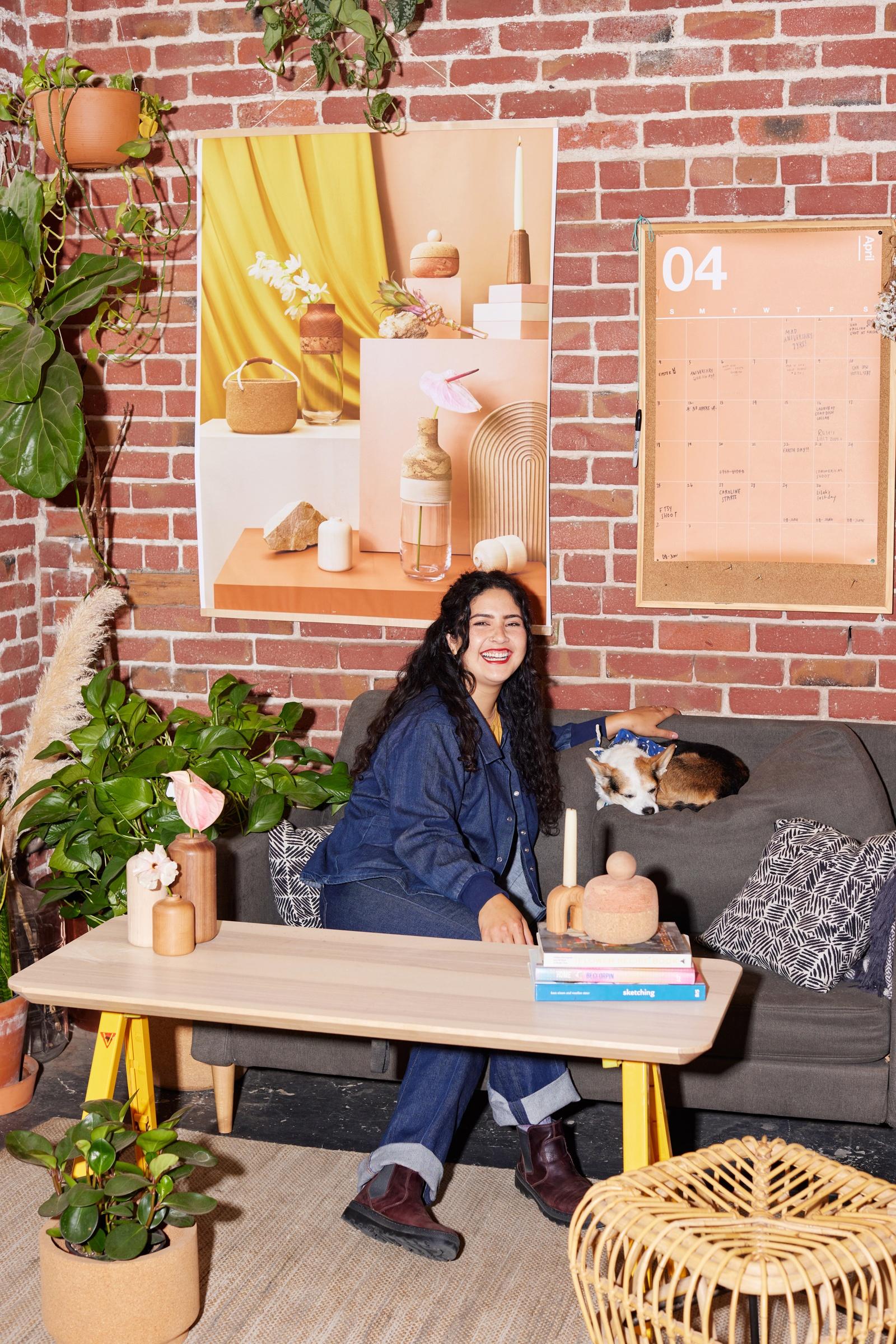
For Melanie Abrantes, a California-based designer with Portuguese roots, cork is personal. “I grew up visiting Portugal as a kid to see my grandfather, and I was always surrounded by beautiful objects made from cork,” she recalls. “Seeing how one material could be transformed into so many different designs really stuck with me. It showed me there was so much more to cork than the typical board or wine stopper. Using cork became a way to honor where I come from while reimagining the material through a contemporary lens.” Her designs, which span furniture, interiors, and custom pieces, reinterpret cork for a modern audience while paying homage to its Portuguese heritage.
Portugal’s Cork Legacy: Tradition Meets Sustainability
Cork’s story stretches back more than 4,000 years. Ancient Egyptians used it to seal amphorae, Greeks for fishing tackle, and Romans for sandals, roofs, and ship insulation. Archaeologists have found cork artifacts dating to 3000 BCE, evidence of its resilience and versatility.
Portugal’s cork legacy grew in the Middle Ages when royal decrees banned the felling of cork oaks, recognizing their economic and environmental importance. By the 18th century, Portugal produced the world’s finest wine stoppers, and by the 19th century, industrial cork factories dotted the banks of the Tagus River. Towns like São Brás de Alportel and Santa Maria da Feira became centers of craftsmanship.
Today, cork accounts for around 2.5 percent of Portugal’s annual exports, yet its impact spans industries from wine to fashion, cosmetics, construction, design, automotive, and even aerospace.
Cork Forests: Ecological and Economic Engines
Portugal’s 730,000 hectares of cork forest, or montado, represent one of Europe’s most biodiverse ecosystems. Cork oak forests host more than 200 plant species, over 100 bird species, and several endangered mammals, including the Iberian lynx and the imperial eagle. These forests capture approximately 14 million tons of CO₂ per year, equivalent to the annual emissions of nearly 3 million cars, while preventing soil erosion, regulating water cycles, and mitigating desertification.
“For me, seeing the cork forests while driving through the Algarve always feels magical,” Abrantes says. “The trees look almost bare when part of their bark has been harvested, but it’s also a reminder that the bark grows back and can be used again and again. I often choose cork blocks that still show the natural bark so people can truly see what the material looks like in its raw state. It becomes a small, beautiful reminder of the tree and the landscape it comes from.”
Cork production also drives local economies. APCOR, the Portuguese Cork Association, notes that the sector sustains 8,000 direct jobs and indirectly supports thousands more in forestry, tourism, gastronomy, and livestock farming. “Cork embodies the principles of a circular economy,” says Paulo Américo Oliveira, President of the Board at APCOR. “Its intrinsic properties, technical quality, and versatility, combined with ecological value, make it a material of the future, deeply rooted in centuries of cultural heritage.”
Harvesting Cork: Craft, Precision And Respect
Cork harvesting, or tiradia, is a ritual as much as a profession. Harvesters, known as tiradores, begin their work in mid-May through mid-August. Using specialized axes, they make vertical and horizontal cuts to carefully remove bark slabs without damaging the living tissue of the tree. Each tree can only be harvested once it reaches about 25 years of age, with subsequent harvests at nine-year intervals, allowing the bark to regenerate. The tree may live more than 200 years.
José Pedroso, General Manager of Granorte, one of Portugal’s leading cork companies, describes the process: “Cork comes from the bark of the Quercus Suber, and it’s harvested without cutting down the tree, making it a truly renewable resource. Only the outer layer is removed, and this process does not harm the tree, allowing it to regenerate new bark every nine years.”
Abrantes reflects on the link between craft and creativity: “Cork harvesting is still done entirely by hand and passed down through generations. That craftsmanship and respect for the material is something I hold close. When I design or carve, I often think of those same hands in the fields of Alentejo, carefully cutting the bark from the trees. My own process is slower and much smaller in scale, but it comes from the same place: a deep respect for time, skill, and tradition.”
The harvested planks are stacked outdoors for at least six months before processing, allowing them to stabilize naturally. Even as technology improves efficiency in factories, the hand of tradition is never absent. Abrantes cites her Anni vases as examples of innovation rooted in respect for cork: “I created a new way of mixing two types of cork together, and it was exciting to challenge what people expect from the material. Each project becomes a new exploration of what cork can become, and I am constantly surprised by how adaptable it is.”
Innovation, Research, and Portugal’s Cork Market Leadership
Portugal’s dominance in the cork market stems from scale, expertise, and continuous innovation. APCOR reports that the country holds 50 percent of global raw cork production and is the world’s largest exporter. Forest management integrates biodiversity preservation, carbon sequestration, fire prevention, and advanced GIS mapping to optimize montado health.
Factories have evolved too. Granorte uses AI-driven sorting systems, robotics, and molecular analysis to improve efficiency and quality control. Circular production ensures that every part of the bark—even dust—is reused or converted into renewable energy. “Portugal is transforming cork from a traditional material into a symbol of responsible technological innovation,” Américo Oliveira says.
This blend of craft and innovation has broadened cork’s applications beyond wine stoppers to include construction, interior design, fashion, automotive, and aerospace. Abrantes sees this as a creative horizon: “I think cork is just beginning to have its moment! Designers and architects are rediscovering it not only as a sustainable material, but as a beautiful one. To me, cork is the perfect bridge between traditional craftsmanship and contemporary design.”
Cork Challenges And Opportunities In Portugal And Beyond
Despite its success, the industry faces modern pressures. Climate change, droughts, and wildfires threaten forests, while labor shortages make traditional harvesting more difficult. Global competition from synthetic alternatives also challenges producers to demonstrate cork’s value.
Yet both APCOR and Granorte remain optimistic. Adaptive forest management, technological innovation, and education programs aim to attract younger generations to the craft. Abrantes sees these challenges as part of the narrative: “Cork forests are incredibly rich ecosystems. When cork is harvested responsibly, it actually strengthens the tree and encourages new growth. It’s a powerful metaphor for sustainable design. Thoughtful, intentional use can lead to regeneration instead of harm.”
Cork as Culture and Design
Cork is both a heritage material and a modern design frontier. Abrantes emphasizes its cultural resonance: “Cork is a natural part of life in Portugal, and it is one of the country’s greatest resources. By designing with it and sharing its story through my work, I hope to highlight the importance of the people and places that make it possible. Cork connects ecology, economy, and culture in a way that few materials can.”
Her optimism for the future is palpable: “I recently designed a room made entirely of cork with Granorte, and it will be cork from top to bottom. I cannot wait to share what is possible. With every new innovation, designers will be able to do so much more. I am passionate about cork and excited to see how far we can continue to push it.”
From the forests of Alentejo to luxury interiors in New York, Portugal’s cork is more than a material. It is a story of sustainability, heritage, creativity, and innovation—an eco-marvel that continues to grow, regenerate, and inspire.