

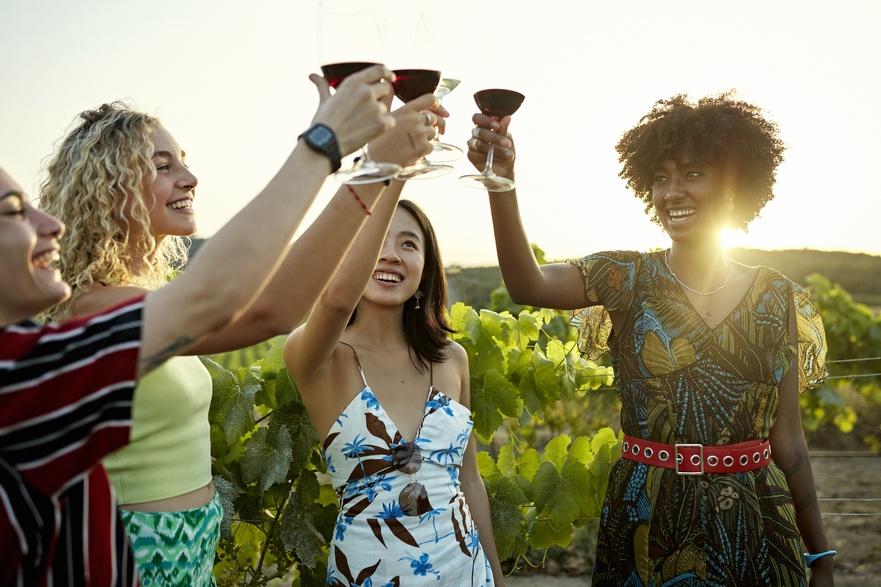
The Spanish region of Catalonia may only be around the same size as the State of Maryland but it is home to some 300 wineries spread across 12 appellations or D.O.s (which stands for denominaciones de origen and refers to an officially designated wine region).
Each region produces wines with their own set of characteristics—from the fresh, mineral whites of D.O. Alella, to the deep, full-bodied reds of D.O. Priorat, and everything in between. To help you make sense of it all, here is a selection of the finest wines from each of Catalonia’s 12 wine regions, all of which are available to order in the U.S. ahead of the festive season.
D.O. Alella: Alta Alella, Cau d’en Genís
Set just over a mile from the coast and 12 miles from central Barcelona, Alta Alella is a winery with a distinctly Mediterranean character. Cau d’en Genis is made from the finest Pansa Blanca (Xarel·lo) grapes and aged on fine lees in clay-based cement eggs. As a result, the fruit is expressed in its purest form, enhancing the character of the terroir. The wine has a pale yellow hue and a direct, slightly metallic nose. The palate is full of white fruit notes, with hints of fennel, and the very slight saltiness and minerality for which Alella wines are known.
D.O. Catalunya: Clos d’Agon Tinto
Wine has been made in Catalonia since the Phoenicians and the Romans introduced vine cultivation to the region. Despite being one of its youngest denominations, D.O. Catalunya is the heir to this ancient wine-growing tradition. Created in 1999, the D.O. provides a quality seal for wineries that produce excellent wines but are not part of another Catalan D.O., allowing for more flexibility in blending non-native grape varieties. One such example is Clos d’Agon Tinto, an intense red wine, with a complex nose, due in no small part to its unusual blend of 46% Cabernet Franc, 41% Syrah, 7% Petit Verdot, 6% Cabernet Sauvignon.
D.O. Cava: Juvé y Camps, Gran Juvé
Although the D.O. Cava designation is not limited to a specific region, more than 95% of Spain’s quality bubbles come from Penedès. This superb bubbly from high-end winemakers Juvé & Camps is no exception; a Blanc de Blancs produced using a symphony of varieties: Chardonnay, Xarel-lo, Macabeo and Parellada. The wine has a captivating golden yellow color and tiny, persistent bubbles that dance effervescently in the glass. On the nose, notes of fennel, stone fruits and a delicate touch of toasted almond combine to deliver a unique aromatic experience. On the palate, excellent acidity gives this full-bodied wine perfect balance.
D.O. Conca de Barberà: Familia Torres, Grans Muralles
An unsung appellation, Conca de Barberà’s wine-producing potential is only recently being acknowledged, due in no small part to its unusual indigenous grape varieties. Like those found in Familia Torres’ exceptional Grans Muralles. This dark-pigmented wine is a blend of indigenous varieties, including two ancestral grapes, Garró and Querol. It was the first wine produced within the Torres family’s four decades-long project dedicated to recovering forgotten ancestral Catalan varieties. Concentrated on the nose, it is rich in black fruit aromas and spicy notes of cloves and pepper over a background of Mediterranean forest. On the palate, it is tasty and refined, with more inner strength than volume.
D.O. Costers del Segre: Familia Torres, Purgatori
Another of the smaller, lesser-know Catalan wine regions, Costers del Segre consists of seven small regions in Lleida, between the River Segre and the Pyrenees. Purgatori is another example of Torres’ high-end range: a fresh, elegant and velvety red with a warm, spicy black pepper palate that comes with a fascinating story to boot. In 1770, the Abbey of Montserrat ordered an estate to be built at L’Aranyó, an area known for its extreme climate and harsh living conditions. Disobedient friars were sent here to do penance and work the land. Eventually they also started making wine but, at one point, large barrels began to mysteriously vanish. The monks were quick to explain the disappearances: it seemed the angels were taking their excellent wine to heaven, and who would blame them?
D.O. Empordà: Perelada, Aires de Garbet
Aires de Garbet is a wine that embodies the essence of Empordà, where Garnatxa, the region’s signature grape variety, finds its most expressive form. It originates at the Perelada winery’s Finca Garbet, a spectacular vineyard overlooking the Costa Brava, where four unique elements combine: the warmth of the sun, the character of its slate soil, the relentless tramontana wind, and the nearby sea. Its bright ruby color reveals the delicate skin of the Garnatxa grape, while its aromatic profile evokes the Mediterranean through hints of aromatic herbs, ripe red fruits, and a balsamic background. On the palate, it is warm, intense, yet delicate and ethereal.
D.O. Montsant: Josep Grau, La Florens
Montsant, the under-the-radar neighbor of the ultra-prestigious Priorat, is where you will find Josep Grau, a new-generation winemaker who left corporate life in Barcelona to return to his native land. These days, the wines made by Grau in both Montsant and Priorat are among the most highly regarded in all of Catalonia. A tribute to Josep’s mother, Florentina, La Florens is a superb wine made from 100% red Garnatxa that regularly receives top scores from the world’s leading wine critics. Medium bodied with an elegant texture and silky tannins, La Florens has a calm nose with aromas of raspberries, strawberries, sweet red cherries, and a hint of nougat. On the palate, it is pure finesse.
D.O. Penedès, Jean Leon: 3055 Rosé
Penedès may be best known as the home of cava but this region, located just south of Barcelona and inland from the Mediterranean also makes some rather excellent still wines. Like this elegant, pale pink, Provencal-style rosé with an intensely aromatic, perfumed bouquet that reveals notes of stone fruits, red berries, and subtle nuances of white fruit. The man behind it, Jean Leon, was an impoverished Spanish émigré, turned New York cab driver. His license plate number 3055 has become a symbol for the man from humble origins who made all his dreams come true. Leon went on to open “La Scala” restaurant in Hollywood before returning to Spain to open his own award-winning winery.
D.O. Pla de Bages, Sant Miquel d’Oló, Sotabosc
The relatively isolated Pla de Bages region sits in the center of Catalonia and spans 27 municipalities, surrounding the county’s main urban center of Manresa. Sotabosc is one of only a handful of Pla de Bages wines currently available in the U.S. It is made from 100% Garnatxa Negra grapes that are harvested by hand and fermented in stainless steel tanks and aged in chestnut barrels. A medium-bodied red, it tastes young, fruity and spicy with medium tannins.
D.O.C. Priorat: Clos Mogador Priorat
Priorat is not a D.O., but a D.O.C., which stands for Denominacion de Origen Calificada (Qualified Designation of Origin), the highest quality designation a Spanish wine region can achieve. One of only two Spanish D.O.C.s (along with Rioja), its award-winning, elegant, velvety reds certainly live up to the billing. Clos Mogador was founded by the legendary winemaker René Barbier, whose 1989 vintage put Priorat on the global wine map. Now, his son, René Barbier Meyer, is exploring new wine profiles that balance the region’s signature intensity with newfound freshness. Like Clos Mogador Priorat, a complex wine, with black and red fruit aromas, and notes of balsamic combined with the region’s characteristic mineral background.
D.O. Tarragona: Padró & Co., Rojo Clásico
Tarragona, with its mild Mediterranean climate and stunning coastal wineries, is one of Spain’s oldest wine D.O.s, located in the region of what was once the Roman capital city of Tarragona. While Padró i Familia produce some rather excellent D.O. Tarragona wines (their most famous label Ipsis, is sadly not available in the U.S.), what this Tarragona-based bodega is most famous for is its superlative vermouth, based on the same Macabeu and Xarel.lo wines found behind its D.O. Tarragona non-fortified labels. Although not technically part of the D.O., vermouth is such an institution in Catalonia that it deserves a mention. Recreate your own “hora del vermut” this festive season with Padró & Co’s Rojo Clásico.
D.O. Terra Alta: Alta Vins, Domus Pensi
One of Catalonia’s most historic winemaking regions, Terra Alta is the southernmost D.O. in Catalonia. Spread across 12 municipalities in the mountains found inland from Tarragona, D.O. Terra Alta makes most of its red, white, fortified, sweet and sparkling wine from Garnatxa grapes. In fact, the region is responsible for a whopping 33% of the world’s total Grenache production. One such example is Domus Pensi, an unfiltered blend of Garnatxa Negra, Merlot, Syrah and Samsó, with an intense, almost violet color, and a complex nose of red fruit, with notes of plum, raisins, cocoa and toasted coffee. On the palate, it is sweet and voluptuous with a well-rounded evolution.
And One Extra… Corpinnat:
Llopart, Original 1887
While Corpinnat is not a D.O., it is a collective brand that has been registered with the European Union by a group of Penedès-based sparkling wine makers who chose to separate from D.O. Cava. Launched in 2018 by six wineries, the brand has since expanded to include 19 members. Corpinnat wines adhere to stricter standards, and can only be produced in Penedès. Llopart is a Corpinnat co-founder, run by one of the oldest wine-growing families in Europe. Its Original 1887 was born from the desire to perpetuate the family’s 19th-century winemaking traditions. With its powerful flavor, rounded acidity, and great aromatic depth, this superb wine has tones of ripe white fruit and honey, and aging notes of brioche, toast, butter and nuts.