

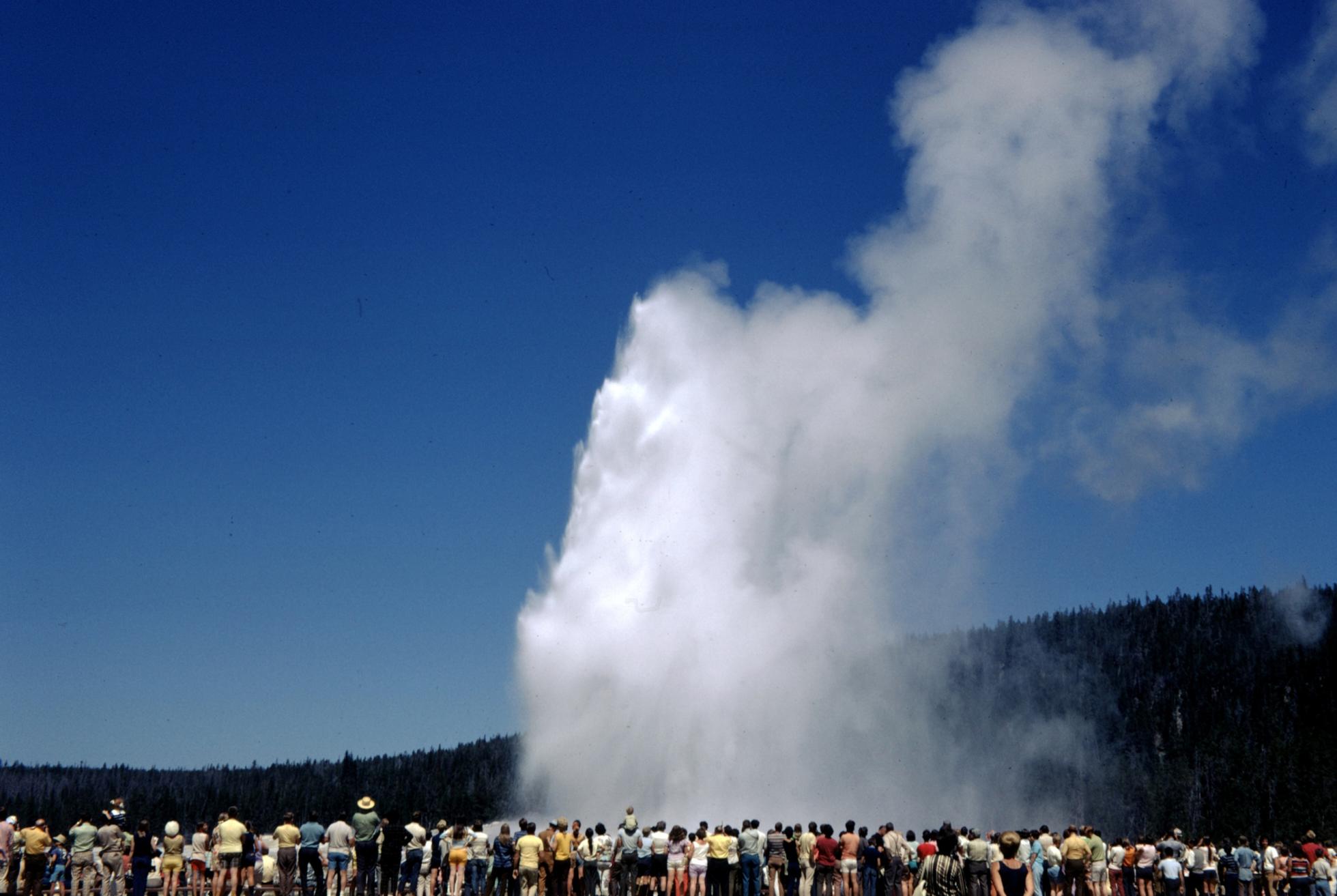
Foreign travelers visiting America’s most-visited national parks will be paying much more than Americans under a new Trump administration policy beginning in January.
The Department of the Interior announced this week that foreigners entering 11 popular parks will be hit with a $100 per-person surcharge atop the regular entrance fee. At Wyoming’s Yellowstone National Park, for example, a car with four U.S. residents will be charged $35, while four foreigners in a car pay $435.
An annual pass for all national parks, which can be used for all occupants of a vehicle, will cost $80 for a U.S. resident and $250 for a foreigner.
This year and in past years foreigners entering national parks paid the same fees as Americans.
The Coalition to Protect National Parks, an organization comprised of more than 4,700 former and current national park employees and volunteers, opposes the big fee increases for foreigners. The new prices, says Department of the Interior Secretary Doug Bergum, ensure that U.S. taxpayers “continue to enjoy affordable access, while international visitors contribute their fair share to maintaining and improving our parks for future generations.”
The parks affected by the surcharge are Acadia National Park, Bryce Canyon National Park, Everglades National Park, Glacier National Park, Grand Canyon National Park, Grand Teton National Park, Rocky Mountain National Park, Sequoia & Kings Canyon National Parks, Yellowstone National Park, Yosemite National Park and Zion National Park.
Visitors from abroad, says Emily Thompson, the coalition’s executive director, have “been an important economic driver for our parks and gateway communities around the U.S., and this could end up negatively impacting them.”
America’s national parks “should be available and accessible to all, or America’s best idea will become America’s greatest shakedown,” Thompson says.
The surcharges for foreigners are “a small fraction of total trip costs for foreign tourists,” says National Park Service spokeswoman Elizabeth Peace. “These actions were taken directly in response to the president’s executive order that directed us to improve the affordability of visiting national parks for U.S. residents and increase fees on nonresidents visiting national parks to help fund our parks.”
On 10 days next year—up from eight this year—U.S. residents will be given free entry. Foreigners, though, will have to pay an entry fee and the $100 surcharge on those days.
The free days for Americans, which the Trump administration calls “resident-only patriotic fee-free days,” will be President’s Day (Feb. 16), Memorial Day (May 25), Flag Day (June 14), Independence Day weekend (July 3–5), the 110th birthday of the National Park Service (Aug. 25), Constitution Day (Sept. 17), Theodore Roosevelt’s birthday (Oct. 27) and Veterans Day (Nov. 11).
The Department of the Interior noted that Flag Day, which wasn’t a free entry day this year, is President Donald Trump’s birthday. The only free day remaining from 2025 is Veterans Day.
The Interior Department terminated free entry on Jan. 20, Martin Luther King Jr. Day; April 19, the first day of National Park Week; June 19, the Juneteenth holiday celebrating the end of slavery; July 16, the Bureau of Land Management’s birthday; Aug. 4, Great American Outdoors Day; Sept. 27, National Public Lands Day, and Oct. 12, celebrating National Wildlife Refuge Week.
The Coalition to Protect National Parks says national park staffing was cut nearly 25% this year. “Collecting different fees for Americans and foreigners,” Thompson says, “will make work “much more arduous, especially if staff have to check the passports of every visitor to confirm who is a U.S. citizen. Visitors can expect longer wait times and increased frustration.”
National Park Service spokeswoman Peace says “there is no reason to assume collecting a different fee amount increases workload.”
Revenue generated from the new fee policies, according to the Department of the Interior, “will be invested directly back into America’s national parks, supporting upgrades to visitor facilities, essential maintenance and improved services nationwide.”