
Beating the market is hard. But if you’d followed the missives of President Trump and his team this year, you might have found a cheat code.
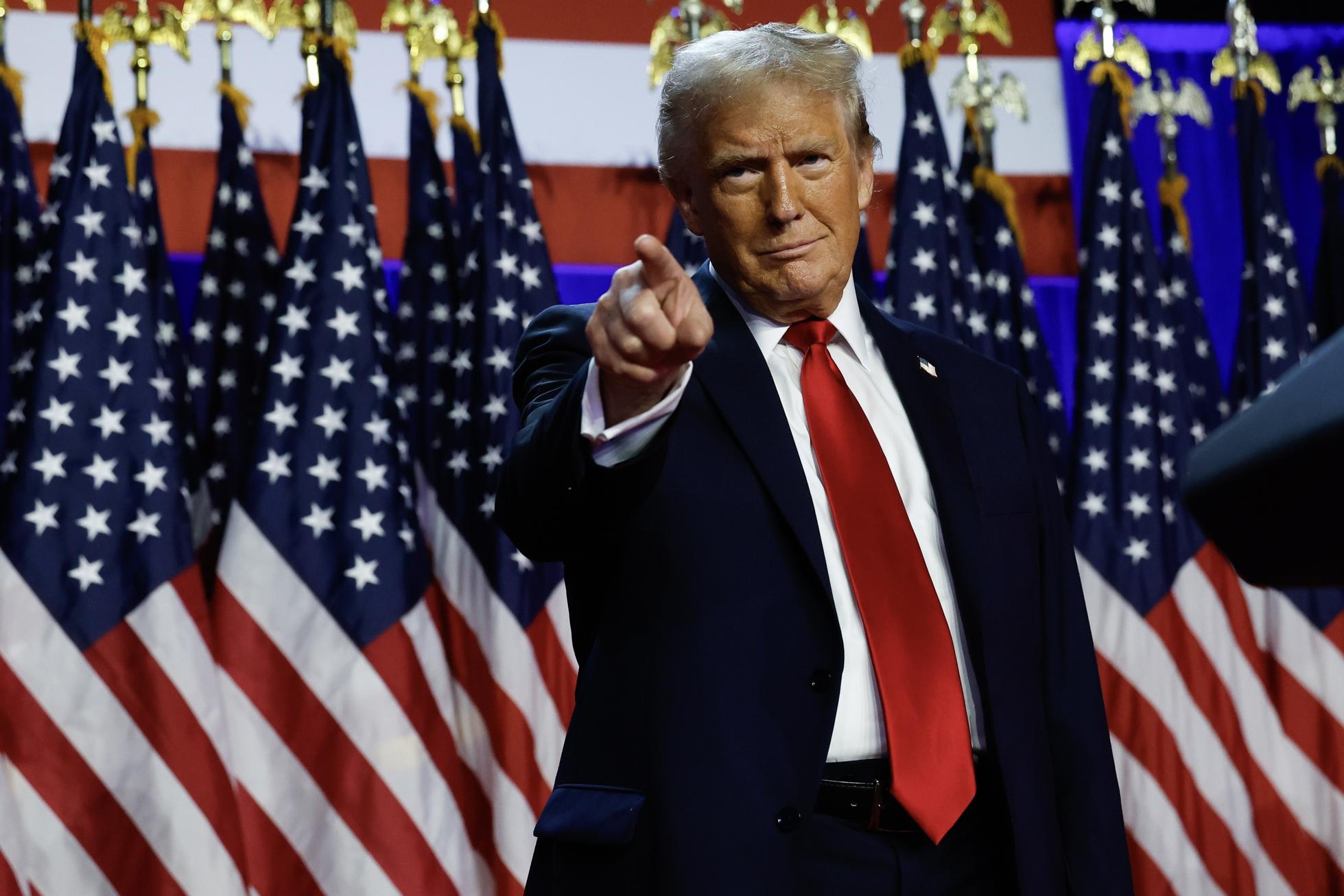
On Monday, GameStop ($3.8 billion in revenue) shares opened trading more than 2% from their prior close, more than double the S&P 500’s early gain. The move came after the White House on Sunday shared a GameStop social media post celebrating the “Halo” series coming to PlayStation for the first time. The official account added a photo of Trump as the game’s hero and wrote, “Power to the Players.” It wasn’t a stock tip, but traders seemed to take it as one.
The same morning, Argentina’s markets took off following the results of the country’s midterm elections in which President Javier Milei, a candidate heavily endorsed by Trump, and his Libertarian party expanded its control of Congress. The Global X MSCI Argentina ETF, with about $620 million in assets, jumped 18% in early trading. Throughout October the U.S. Treasury had spent more than $1 billion buying pesos to sure up the South American country’s notoriously volatile currency.
Neither the GameStop nor the Argentina actions came with explicit endorsements to buy assets, but the effect was the same. Anyone who took the heavy-hint made money in short order. Those moves added to a growing list of rallies that have followed what can be construed as market tips from the Trump administration. Some like touting Tesla’s stock and the President saying it was a good time to buy were direct, raising ethical questions. Others, like GameStop and Argentina, required reading between the lines.
It’s not unusual for a president to move markets. They’re the most powerful person in the world, and policy (or even hints of policy changes) alone can shift trillions. What’s less common is doing it through what looks feels like a WallStreetBets post. When the George W. Bush administration took over mortgage giants Fannie Mae and Freddie Mac in September 2008 to calm the housing crisis, the S&P 500 jumped nearly 3% at the open of the next trading day.
That’s how it usually works. Markets react to policy, not to what stocks a president or cabinet member seems to favor.
In March, Commerce Secretary Howard Lutnick went on Fox News and told viewers to “buy Tesla.” The company’s shares had been cut in half since December after a wave of vandalism and political backlash following Elon Musk’s role in the Trump administration’s Department of Government Efficiency initiative. The shares have rallied since, climbing about 80% since Lutnick’s interview.
A few weeks later, Trump himself helped move the market. In early April, the President announced sweeping new global tariffs that sent stocks tumbling. A little more than a week later, he posted on Truth Social that it was a “great time to buy.” Hours after that, he temporarily paused many of the tariffs. The S&P 500 jumped 9.5% that day, its third biggest single-day gain this century. The sequence drew questions about whether officials had traded ahead of the announcement, though no evidence has surfaced that anyone did.
On October 22, Energy Secretary Chris Wright called oil a bargain. He told Fox News that prices were low and that the U.S. would gradually start rebuilding the Strategic Petroleum Reserve. The very next day, the Trump administration rolled out new sanctions against Russian oil companies. Oil prices soared by 5% on the news.
All of this has raised familiar questions about where enthusiasm ends and influence begins. Some ethics experts say none of this meets the definition of insider trading. As Bloomberg’s Matt Levine told NPR, the key test is whether someone trades on “material nonpublic information” that’s obtained improperly. Public comments don’t qualify. Still, Levine and others noted that while it may not be illegal, it’s hardly routine for government officials to promote private investments.
Whether it’s luck or something more nefarious, the record speaks for itself. The Trump trade has been a winner.
More from Forbes