

A third of private psychologists in the UK have stopped taking new patients, yet 82% of workers say they are at risk of burnout this year. Absenteeism, presenteeism, and turnover are costing the UK economy tens of billions annually, and according to 2024 analysis from the UK’s Centre for Mental Health, the total economic and social cost of mental ill health reached £300 billion in 2022. That is nearly double the NHS budget, an impact equivalent to the direct cost of the pandemic every year.
Mental health is no longer just a matter of personal wellbeing, it is becoming a macroeconomic concern shaping productivity, growth, and social stability. For businesses, the implications go far beyond wellbeing programs. A workforce that is mentally unwell cannot deliver on climate goals, productivity targets, or long-term growth. The ability of people to stay mentally healthy and sustain effort, creativity, and trust over time is now as material to business performance as financial capital.
A Public System Under Strain
While demand for support rises, public provision is retreating. Earlier this year Mind reported that NHS mental-health spending as a share of total NHS funding has fallen and is set to decline again in 2025–26. As chief executive Sarah Hughes said, “Mental health makes up 20% of illness the NHS has to treat. One in four people experiences a mental-health problem in any given year.”
The Royal College of Psychiatrists warns that these cuts come as clinical need is reaching record highs. President Dr. Lade Smith CBE said, “It is illogical that the share of NHS funding for mental health services is being reduced at a time of soaring need and significant staff shortages. Importantly, mental illness affects many young people as they should be entering into the workforce, with 75% of mental disorders emerging by the age of 24.”
Community-based services that once provided early intervention have also contracted. In some areas, local mental-health support has dropped by nearly half. As these safety nets fray, employers are becoming the first responders for psychological distress, often without the training, metrics, or budgets to match.
Charlie Winton, founder and chief executive of mental health platform OK Positive, said in an interview, “If we can make mental health support as accessible as physical health advice, and as normal to use, we’ll have changed the culture completely. It’s about consistency and access, not just innovation.”
Without prevention, problems escalate until they manifest as lost output, higher insurance costs, and chronic turnover. The financial losses are measurable, but the lost potential in terms of innovation, collaboration, and trust is harder to quantify.
The Operating Environment Has Changed
As public systems strain, private and public leaders face a deeper challenge: the world people work in has fundamentally changed. Across sectors, they are contending with overlapping pressures such as economic volatility, climate anxiety, geopolitical instability, and social polarization.
Information now moves faster than attention. The rise of AI, real-time analytics, and always-on connectivity has shortened decision cycles, forcing people to process more data with less time to think. What began as a productivity gain has become a capacity drain. If sustainability is about managing finite resources, then human energy and focus deserve to be counted among them. That new reality is reshaping not only how organisations operate, but what workers expect from them.
Generational Expectations Are Resetting the Social Contract
Mental Health UK’s Burnout Report 2025 revealed a striking generational divide. Younger employees report the highest levels of stress and work absence linked to mental health, with rates falling among older age groups.
For workers aged 18 to 34, openness about mental health is an expectation, not a luxury. Many see proactive support as a basic condition of employment, much like occupational safety. Older cohorts often internalized stress as part of professional identity.
This shift is forcing employers to re-examine long-standing assumptions. Younger staff are not rejecting ambition; they are rejecting unsustainable design. Companies that mistake this for weakness risk losing the very talent they need to navigate a low-carbon, increasingly volatile economy.
Prevention As The New Frontier
The data on prevention are clear. Estimates from the World Health Organization show that every $1 invested in mental-health promotion and prevention yields up to $5 in improved health and productivity. More recent studies, especially in adolescent and preventive programs, suggest that the return may be even greater.
Meanwhile Deloitte analysis has shown that proactive measures such as manager training, workload redesign, and early digital support consistently deliver the highest returns for employers. Prevention is not just compassionate, it is financially rational because it shifts investment from crisis response to smarter system design.
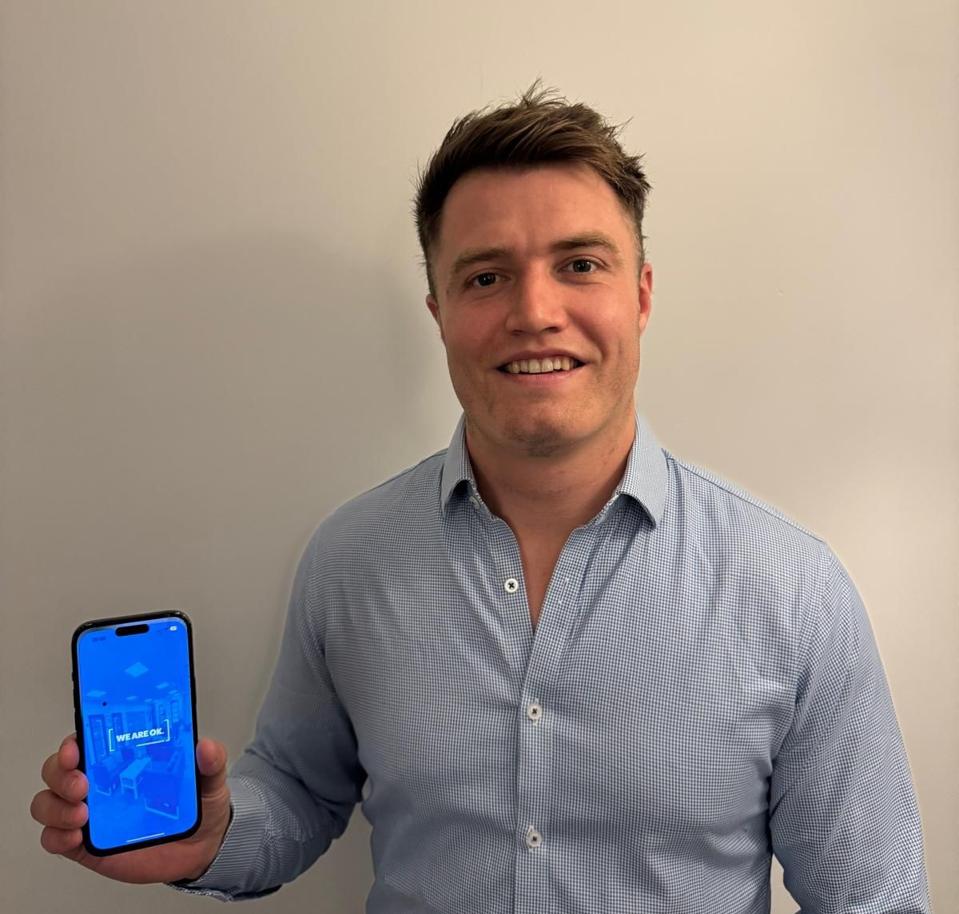
This month provides a live example. On October 15, wellbeing-tech company OK Positive (OK+) and the charity We Are Survivors will launch We Are OK, a digital initiative designed to make preventive mental-health support more accessible and sustainable. Built on OK Positive’s clinically informed wellbeing technology, the We Are OK app will allow users to manage their mental health proactively, offering self-guided tools, peer support, and trusted resources in one inclusive space.
“The future of mental health support will be both cultural and data-led,” says Winton. “We need empathy and analytics working together if we’re serious about prevention.” He adds, “Employers are realising that mental health isn’t a benefit, it’s infrastructure. It affects productivity, trust, and the ability to change at speed. You can’t build sustainable performance without it.”
The launch illustrates how the principles of sustainability, accessibility, inclusion, and long-term viability, can guide mental-health infrastructure. It is a model of prevention through partnership, combining technology with community reach.
From Resilience Talk To Organisational Design
For years, the standard response to workplace stress was to promote individual resilience through mindfulness sessions or short workshops. These efforts, though well-intentioned, remain reactive and place responsibility on individuals rather than on the systems that cause strain.
Research from the King’s Fund and Harvard Business Review shows that lasting solutions require redesigning work itself: aligning workloads with real capacity, ensuring psychological safety in teams, and creating feedback loops that catch pressure before it becomes damaging. The King’s Fund notes that in healthcare settings, burnout often stems not from emotional fragility but poorly designed systems driving burnout and attrition. Author of The Burnout Epidemic, Jennifer Moss, made a similar point in the Harvard Business Review writing, “Burnout is a function of the workplace, not the worker. When chronic stress is baked into the design of the job, no amount of self-care will fix it.”
Practically, this means embedding mental-health indicators into ESG reporting, integrating early-warning analytics into HR dashboards, and equipping managers to identify and address strain as part of routine performance management. It also means rethinking time: pacing projects, building in recovery, and recognising that attention, like energy, is finite and renewable only through rest. These are design challenges, not wellness add-ons.
A Broader Sustainability Logic
The sustainability agenda has always been about aligning long-term viability with responsibility. Environmental and social metrics are now mainstream and human sustainability is set to be the next evolution. Mental health underpins every dimension of ESG: climate anxiety and disaster exposure affect wellbeing; fair work and inclusion depend on psychological safety; and boards are increasingly accountable for workforce risk and disclosure through ESG reporting.
Treating mental health as infrastructure aligns with the UN Sustainable Development Goals, especially SDG 3 (good health and wellbeing) and SDG 8 (decent work and economic growth). A company cannot call itself sustainable if its operating model harms the people sustaining it.
Redesigning Work For Sustainable Performance
Leading firms are beginning to act. Barclays has used workplace analytics to identify stress patterns and redesign schedules before burnout sets in. Manufacturers such as Unilever and Volvo are revising shift structures and introducing recovery metrics to improve rest and safety. At Salesforce and Google, manager training now includes recognising mental load and building psychologically safe teams. Each shares one principle: prevention through design.
The business case is clear. Lower absenteeism and turnover reduce recruitment costs, while stable teams improve innovation and client trust. Google’s own research, known as Project Aristotle, famously identified psychological safety as the single most important factor in high-performing teams. Investors now see proactive workforce strategies as indicators of governance maturity. Sustainability strategies that ignore mental health are incomplete, while those that integrate it strengthen both social legitimacy and operational continuity.
Human Systems As Core Infrastructure
Mental health is no longer a private matter or a side issue for HR. It is an essential part of sustainable business performance and national resilience. As Winton puts it, “Employers are realising that mental health isn’t a benefit, it’s infrastructure. It affects productivity, trust, and the ability to change at speed. You can’t build sustainable performance without it.”
As public services strain and global volatility persists, prevention will become a defining test of leadership credibility. The task ahead is not to make people tougher but to make systems smarter, capable of supporting consistent performance under changing conditions. The organisations that understand this first will not only protect their people; they will secure the human infrastructure on which every other sustainability goal depends.