

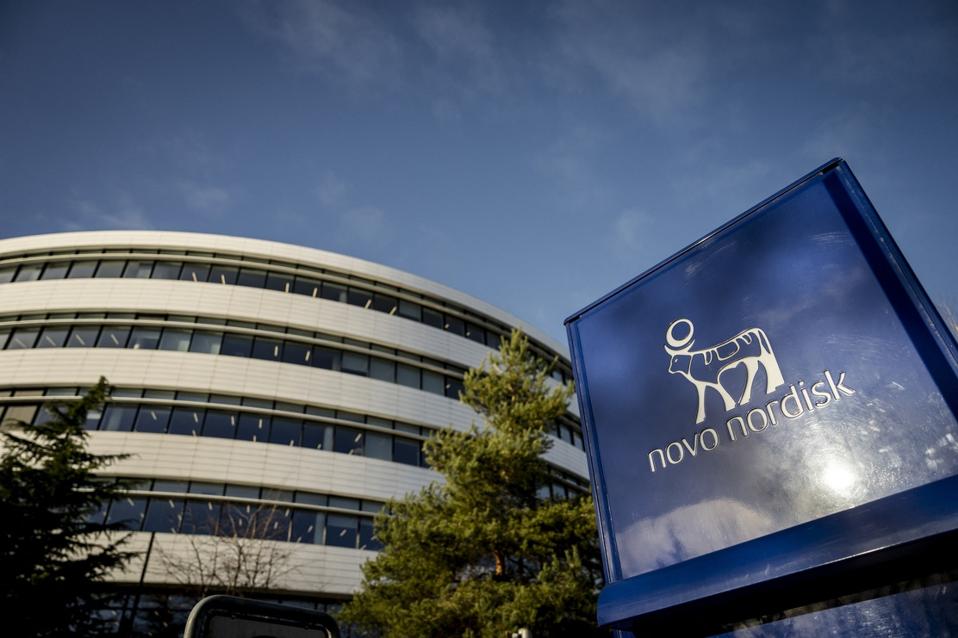
The abrupt firing of Lars Fruergaard Jørgensen exposed a fatal flaw in Scandinavia’s most stable ownership model: too much separation between social and business considerations. But the governance reforms sparked by this crisis may be exactly the fix Novo Nordisk needed.
When Novo Nordisk announced on May 16 that CEO Lars Fruergaard Jørgensen was “stepping down,” the pharmaceutical world was stunned. The real shock wasn’t the departure itself—it was how it happened. The board leaked the decision before informing the CEO, who told Danish broadcaster TV2 that he never saw it coming.
This mess exposed vulnerabilities in one of the world’s most respected ownership models—foundation-owned firms—used by corporate giants from Patagonia to Ikea to the Tata Group. The Novo Nordisk crisis may offer a chance to fix these cracks, and Carlsberg’s foundation structure shows how.
The $300 Billion Meltdown Behind the Firing
Jørgensen’s firing followed a spectacular market meltdown. Novo Nordisk shares plunged almost 50% since mid-2024 as U.S. rival Eli Lilly stole market share. The company lost approximately $300 billion in market value from its peak of $615 billion in March 2024.
This collapse happened despite Novo Nordisk operating in what analysts call the most lucrative pharmaceutical market in decades. The company stumbled badly. Compound copycats—temporarily allowed to ease supply shortages—hurt demand. Disappointing trial results for its next-generation obesity drug shook investor confidence. Meanwhile, Eli Lilly got its drugs off shortage lists faster and ramped up manufacturing more effectively.
When Foundation Ownership Breaks Down
Even though Novo Nordisk’s Foundation had good reason to worry about Jørgensen’s performance, the company is organized to ensure that the Foundation stays out of Novo Nordisk’s operations. Yet, this was clearly not the case in Jørgensen’s firing. Novo Nordisk Board Chair Helge Lund said explicitly that the decision came from “an expression from our main owners to accelerate the CEO succession process.” This level of interference broke the rules that Novo Nordisk seemed to have established.
Here’s how the Novo Nordisk Foundation is structured. Novo Nordisk Foundation has full ownership of Novo Holdings A/S, which is their profit arm. The “A/S” is equivalent to “Inc” in the US or “PLC” in the UK, signaling a joint-stock, limited liability company.
The Foundation appoints two members to Novo Holdings A/S, which owns 28.1% of the share capital of Novo Nordisk A/S. The Novo Nordisk Foundation, then, is quite removed from the Novo Nordisk board, but retains some influence through the Novo Holdings. This helps to separate the Foundation’s philanthropic activities from the pharma business, which generates the philanthropic funds from their business activities. This setup was designed to prevent the Foundation from meddling in the operations of the business – the type of meddling seen with Jørgensen’s firing.
But the recent crisis shows that too much separation creates its own problems. When foundations feel cut off from their companies, they may act rashly. In the case of the Novo Nordisk Foundation, these feelings may have been especially acute, because the Foundation Board Chair, Lars Rebien Sørensen, ran Novo Nordisk from 2000 to 2016. In 2015, the Harvard Business Review placed him at the top of their “Best-Performing CEOs” list. Sørensen likely had strong opinions about Jørgensen’s performance.
Changes to the Novo Nordisk Board
Yet, Novo Nordisk Foundation did not waste this crisis. It is taking steps to fix the original problem. Sørensen will now sit in on Novo Nordisk board meetings as an observer and will also be nominated for a full board position at the 2026 Annual General Meeting.
This marks a major shift toward dual-board representation. The question is whether this change undermines the foundation model or improves it.
Separating Yet Communicating in Foundation-Owned Firms
Industrial foundations are nonprofits that combine business ownership with philanthropy while prioritizing social goals. Foundation ownership challenges traditional shareholder capitalism’s profit-first mentality and is gaining recognition as a viable way to control large public companies.
Foundation-owned firms are common in Denmark, controlling about 25 of the country’s 100 largest companies and 60% of its stock market value. Examples include Bertelsmann, Heineken, Ikea, Robert Bosch, Rolex, and the Tata Group. Although the evidence is not recent, a foundation-owned structure performs at least as well as dispersed ownership and family ownership, yet systematically performs better on its social impact.
The key to their success is the clear separation of the foundation from the enterprises it owns: foundations advance social interests, businesses pursue profits. The foundation ensures the company doesn’t violate core values but otherwise remains independent. Blur the boundaries between foundations and their companies, and the companies could lose focus while foundations develop conflicts of interest.
But some communication is needed—if done right. Carlsberg shows how. Two of the Carlsberg Foundation’s five board members sit on the brewery’s board, including the Foundation Chair who serves as the company’s Vice-Chair.
This creates ‘governance bridges’—formal channels that let foundations oversee without emergency interventions that can destabilize management and spook investors. Regular communication prevents the kind of crisis that hit Novo Nordisk.
Some distance between foundations and companies helps both pursue their missions. But too much distance can trigger crises. Even well-designed governance separation becomes dangerous when communication breaks down during crises. Separation without communication channels can be as harmful as excessive meddling.
I gained a genuine interest in this corporate form after interviewing the former CEO of Novo Nordisk, Mads Øvlisen, and “father of CSR”. I became so intrigued that I investigated this form of ownership and also wrote about Yves Chouinard’s decision to divest control of Patagonia to a trust.
Three Critical Governance Lessons
The Novo Nordisk crisis teaches three key lessons:
- Communication is everything. Even elegant governance structures fail without ongoing dialogue between the foundation, the firm and its stakeholders. The shock expressed by analysts and Jørgensen’s surprise at his firing reveal catastrophic communication breakdown.
- Separation has limits. While distance between foundations and operating companies usually helps performance, complete isolation can be as dangerous as excessive interference. Good governance needs institutional bridges that enable oversight without micromanagement.
- Crisis planning matters. Foundation-owned firms must establish clear protocols for how foundations can raise concerns during tough times, preventing dramatic interventions that shake confidence.
Novo Nordisk’s governance experiment faces close scrutiny in coming months. Whether the company can restore investor confidence while preserving foundation ownership’s long-term stability will determine if this crisis becomes a cautionary tale or a successful reform model for foundation-controlled enterprises worldwide.