

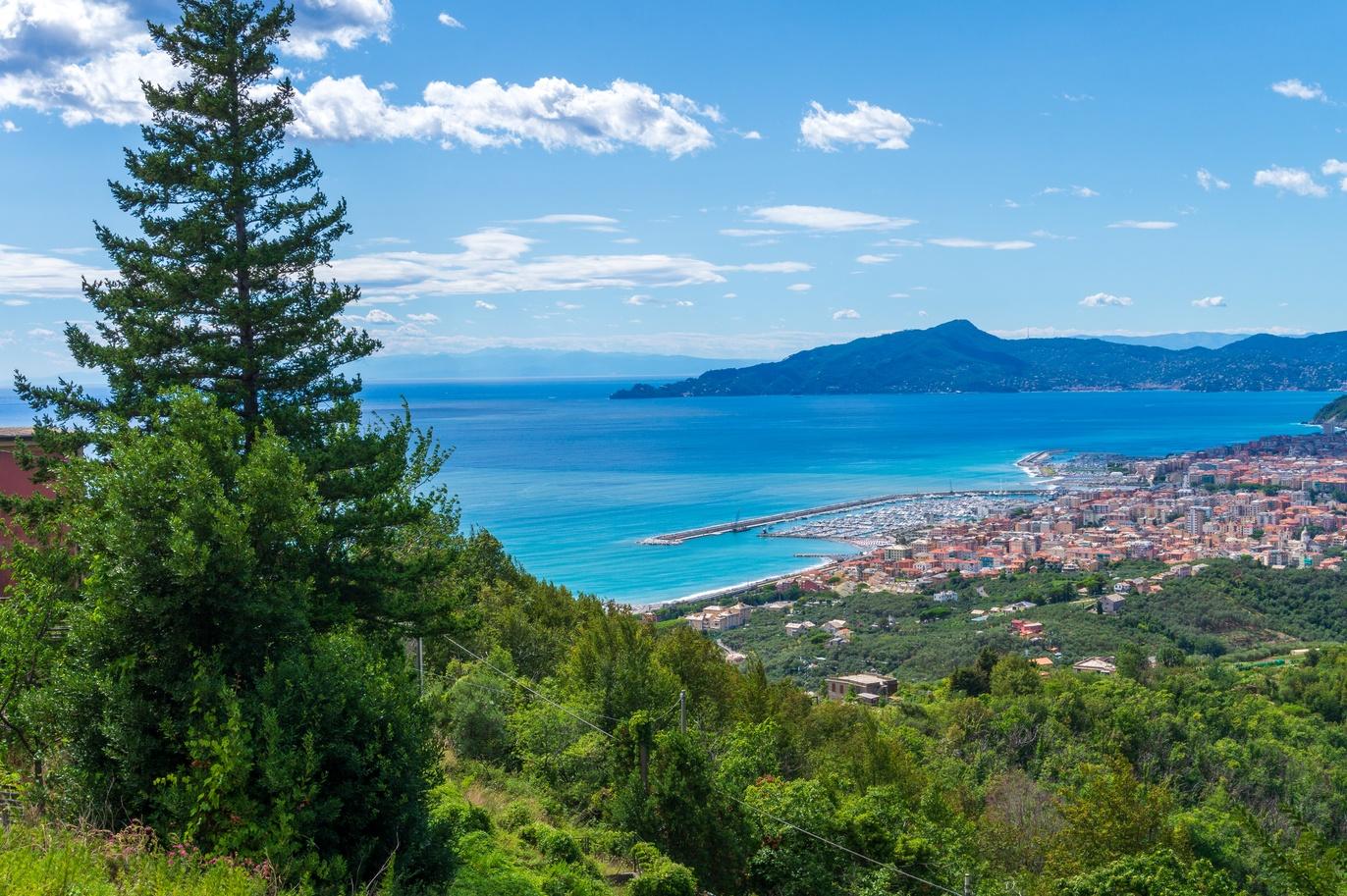
The eastern coast of Italy’s Riviera, beginning in Genoa and ending at the Tuscan border, ranks among the most famous seasides in the world, with wildly popular resorts like Portofino and Cinque Terre. While there are still uncrowded hamlets to explore, there’s also a remarkable, lesser-known Riviera city, Chiavari, that you should add to your must-see list. It’s so delightful, authentic and complete as a holiday destination you can’t help but wonder why it hasn’t yet exploded with international travelers (but are grateful for the fact it hasn’t).
A Perfect City
If your checklist for an ideal summer spot includes a place without mobs of tourists, ample beaches, a variety of cultural attractions, locavore restaurants free of tourist menus, indie boutiques, plus a better-than-average chance of sunny weather (in July and August), head to Chiavari.
For centuries this quietly prosperous city—Napoleon made it the capital of the Apeninnes in the early 1800s—relied on maritime commerce, agriculture and furniture production (the Chiavarina chair often used at weddings or for ballroom galas was created here) to swell its coffers. Post-World War II seaside tourism was added to the mix, but without the jet-set flash. Families came to rent apartments or book extended hotel stays during warm-weather months, and somehow managed to keep the destination a “secret” for themselves.
Olga Bacigalupo, whose family founded and owns one of the principal hotels in town, the Monte Rosa, says her guests are mostly Italian and European, a blend of vacationers that have typically been drawn to Chiavari. While Cinque Terre and Portofino attract the lion’s share of international travelers this may be starting to change. Bacigalupo points to events like Chiavari in Fiore (a flower festival) in May and the annual Economic Forum Giannini in April attracting new visitors to the city. But Chiavari seems to be choosing its modern-day tourism path carefully, avoiding situations that can lead to overcrowding, and focusing on cultural events like jazz and theater festivals for peak summer months.
Via Martiri
In contrast to many tourist-centric destinations, Chiavari lets you feel connected to the city and immersed in its native rhythms simply by strolling the main shopping street, Via Martiri della Liberazione, an arcaded walkway reminiscent of Bologna’s porticoed corridors.
Although it can be quiet in the evening (a lot of the restaurant action is along the side streets, like Via Bighetti, and by the sea), Via Martiri is the prime gathering spot come morning whether for shopping or a coffee meet-up, as Chiavarians go about their day-to-day, which includes a mandatory stop at the large open-air food market in the Piazza Mazzini. Here you’ll find an exceptional bounty of fruits and vegetables, a good selection of local cheeses and connoisseur vendors who can tell you a thing or two (and do) about selecting the best fennel or asparagus. The last weekend of the month there’s a bonus market to visit on the historic Via Rivarola, called Tipicamente Chiavari, with artisanal and DOP produce.
A Beach Town, Too
At 1 PM, Via Martiri becomes quiet, a majority of shops close for an hour or more, another sign that even in high season the city remains in sync with the traditions and habits of its year-rounders. Many Chiavarians head home for lunch, although the twenty-ish crowd tends to linger at local bars or caffès for an insalatone or large slice of foccacia. A couple of hours later the town buzzes to life again, and as you get closer to the waterfront, you see people with umbrellas and rolled up mats walking to the sea.
A long lungomare flanks a scenic coastline with a mix of public beaches and private lidos (Chiavari beaches have earned Bandiera Blu status). The marina, with 459 moorings, is where you can catch a ferry to Portofino or Cinque Terre.
Historic Villas, Shops and Caffès
As you walk around the city, you become aware of its quiet wealth, rooted in other centuries. Set out for the Via Enrico Millo, in a residential area outside the centro storico, where you’ll come across gracious Liberty-Style villas, the legacy of the Chiavarians who sailed to South America in the 19th-century to seek their fortunes, and when they found them, came back to enjoy the good life in their hometown.
If you look for botteghe storiche (historic shops) when you travel in Italy, Chiavari has a number of them, which like the Liberty villas date from the 19th century, that period of notable prosperity in the city’s history. Fans of Caffè Greco in Rome should go to the Gran Caffè Defilla, a place that Rita Hayworth once visited, located on Corso Garibaldi in another arcaded passageway. You can while away the early evening hours outdoors with a Negroni or Spritz (or when the weather is cool, inside in the Art Nouveau-style salon). But you could spend your entire day here: as per its name, Defilla is a caffè with plenty of local pastries to get you started in the morning or revived in the afternoon, but there’s also a restaurant and wine store that can have you at Defilla from morning to dusk.
The Pasticceria Coppello, in business since 1826 and specializing in local sweets, is another requisite stop. Try the hometown cookie, dolcezze di Chiavari, or pandolce, Liguria’s answer to panettone. Visit the historic Panarello for more artisanal sweets; a favorite is the almond cake named after the shop.
Museums
Perhaps because Chiavari is still under-the-radar for many, there’s a sense of discovery when seeking out the city’s cultural attractions. At the Palazzo Rocca, you can take in thousands of years of Chiavari history at the archaeological museum, which includes Iron Age artifacts excavated from nearby burial grounds. The palazzo has another museum, the Civic Gallery, that provides more recent insights into local history with period rooms and Genovese and Flemish paintings dating from the 17th century.
Other highlights include the Palazzo Ravaschieri Museum with a wide-ranging art collection that reaches from the 15th century to the present, and the Risorgimento Museum, one of the country’s most important centers for memorabilia from Italy’s unification period. Both are located in the the palazzo that’s home to Chiavari’s Società Economica, a cultural institution founded in 1791 that’s long played an important role in the city’s artistic and civic life.
The Cattedrale di Nostra Signora dell’Orto dates from the 1600s, and is noted for an ornate frescoed and marble interior. Chiavari’s annual celebration honoring its patron saint, Madonna dell’Orto (July 1-3), is a major event in the city with a program of special masses at the cathedral, a heavily attended city-wide procession, and a lavish fireworks display over the sea.
Lodging: In town, the four-star Hotel Monte Rosa is in an ideal location, a short walk from the main shopping street, Via Martiri. This is a welcoming family-run property, with the grandchildren of the founders, Luigia Rocca and Luigi Bacigalupo who started as restaurateurs in 1909, running the 59-room hotel today. The Monte Rosa has a swimming pool and provides a shuttle twice a day to a private beach club. For those who want to stay on the beach there’s the Grand Hotel Torre Fara with a swimming pool facing the seaside promenade.
Dining: Luchin, in business since 1907, is an essential stop for authentic Ligurian cooking. Farinata, minestrone Genovese, vegetable pies and pansotti are among their specialties with many dishes prepared in an ancient wood-fired oven. For fresh fish from the Ligurian Sea and and homemade pastas, there’s Da Felice, known for its carefully sourced locavore ingredients. Another restaurant on the water is Ostaia Ca Da Gurpe Al Mare, with well-curated seafood options and great seaside views.