

The United Auto Workers union, despite making major gains in negotiations with Detroit automakers, is finding many of its members want more.
The Detroit-based union reached tentative agreements with General Motors Co., Ford Motor Co. and Stellantis with a 25% raise over 4.5 years. The pacts also called for a return to cost-of-living adjustments and other improvements.
Still, going into negotiations, the UAW said it wanted a 40% wage increase, a return to traditional pensions and a four-day work week. The union didn’t achieve those targets.
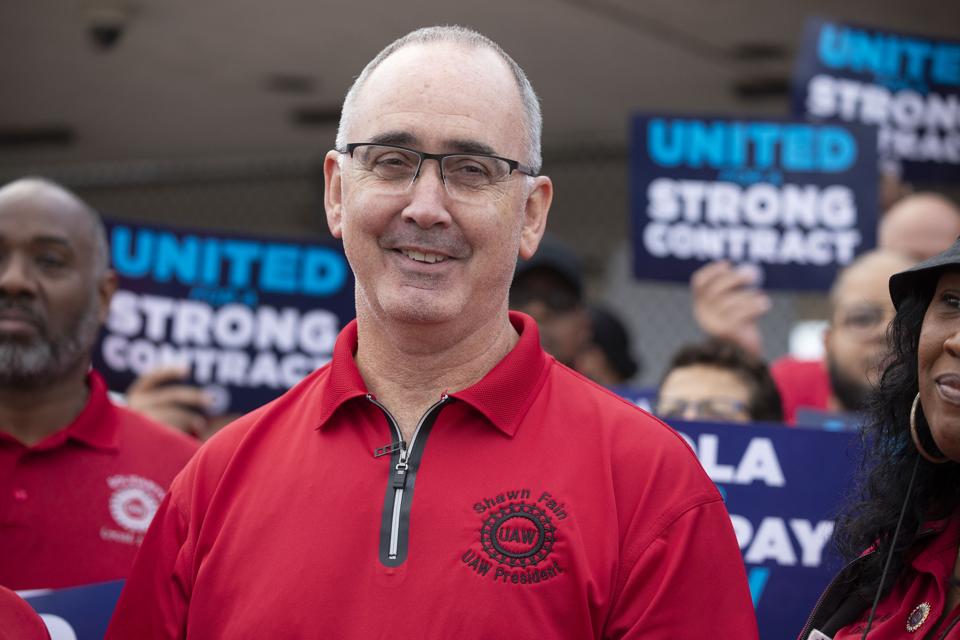
Union president Shawn Fain said repeatedly the union has gotten every dime it could from the companies in the talks.
According to the UAW’s website, GM workers voted 55% to 45% to ratify the tentative agreement at that company. But workers at some major plants voted no. For a time, the results were close enough to raise the question whether the accord would be ratified.
As of Friday, neither the UAW nor GM had issued a statement about the results. Meanwhile, the ratification process was still underway at Ford and Stellantis.
Fain struck a tough note from the start. Traditionally, labor negotiations began with a ceremony where UAW negotiators shook hands with their counterparts from the companies. Fain dispensed with that, sending a signal how these negotiations would be different.
The union president also opted for a new strategy – the UAW went on strike against some plants at all three companies. The UAW added more plant strikes over time. At one point, Fain wore a shirt that said “Eat the Rich” on the front.
Eventually, the union reached tentative pacts with the companies. The wage increases prompted foreign automakers with U.S. operations to boost wages, presumably an attempt to remain non-union.
Despite that, the ratification process hasn’t been easy for union leaders. UAW members made concessions in the 2000s when GM and Chrysler Corp. (eventually absorbed into Stellantis) filed for bankruptcy.
The union’s strikes against the automakers got results. For a significant portion of the UAW’s membership, that wasn’t enough. For the UAW and the Detroit automakers, that’s a challenge to confront.