

As the Premier League becomes increasingly global, one thing that keeps clubs connected to their local neighborhoods is the story of the local kid turned good.
Chants of “He’s one of our own” could be heard less frequently in some stadiums this season though.
Tottenham Hotspur’s Harry Kane is probably one of the best-known recipients of that chant. The Londoner went through the Spurs youth team and became one of their all-time greats before moving to Bayern Munich earlier this summer.
The money Spurs got from Kane’s sale saw them swoop for another side’s hometown hero, Nottingham Forest’s Brennan Johnson, signing him for $60 million on transfer deadline day.
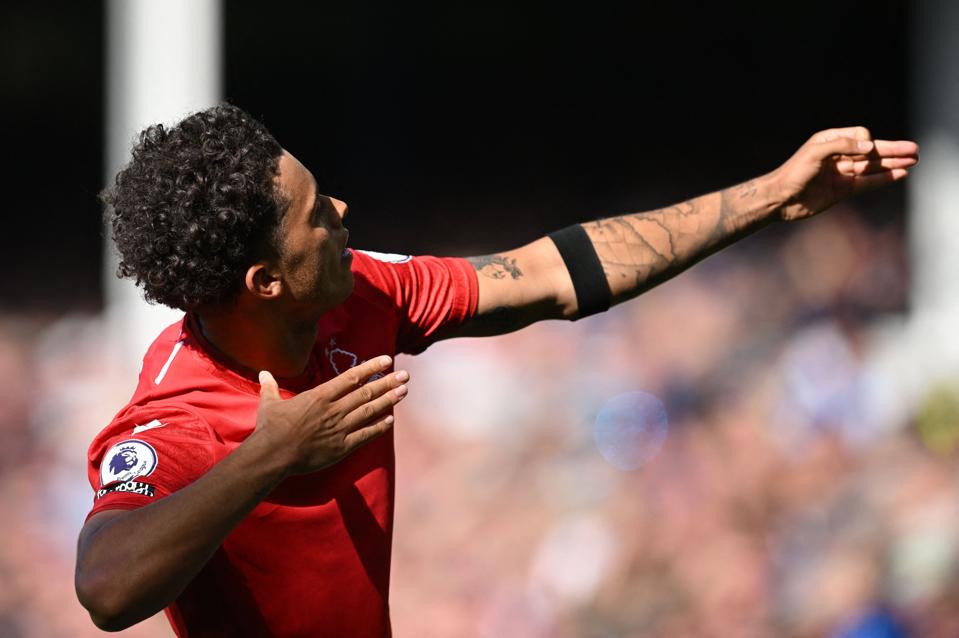
Frequently serenaded with “He’s one of our own” chants, along with an adaption of the Human League’s “Don’t You Want Me,” Johnson was born in the city and followed in his father David’s footsteps to play for Forest.
Brennan Johnson’s rise has been meteoric. Three seasons ago, he had his first full season in soccer, playing on loan at Lincoln City in League One. He got his chance at Forest under Steve Cooper the following season and was named Championship Player of the Season as he led Forest to promotion to the Premier League, scoring 16 goals and sometimes marking them with a bow-and-arrow celebration, a possible nod to his hometown’s famous outlaw, Robin Hood. Johnson’s performances in the top-flight last season have attracted plenty of interest, and if he continues on his current trajectory, the Welsh international could go all the way to the top.
But while Forest would have loved to keep Johnson, the Premier League’s profitability and sustainability rules mean otherwise. To balance the books, all but the biggest clubs need to occasionally sell their top assets.
Johnson found himself on the bench toward the end of last season, and while still a key player, might not be quite as vital as other Forest players like Morgan Gibbs-White or Taiwo Awoniyi.
But another reason why Forest might be willing to sanction Johnson’s sale is that he came through the Forest academy.
That means Forest didn’t pay a transfer fee for him so any money received from him is “pure profit” which would make a huge impact in keeping the club within Profitability and Sustainability rules.
The whole price received for the winger would go in the ‘profit’ part of the balance sheet, giving the club a lot of leeway when it comes to new signings. If Gibbs-White had’ve been sold instead, then the profit would’ve been much smaller due to the huge fee Forest bought Gibbs-White for in the first place. The fees for those new signings are spread out across the length of their contracts so a big sale can fund several new players. These quirks of the Premier League’s rules appear to incentivize clubs to sell homegrown players, especially if they need a quick fix to get on the right side of the rules.
While Johnson is destined for bigger things than Forest’s current level a higher level, there are few other Premier League players who are currently key players for a hometown club.
Johnson is one of three players in Forest’s starting line-up on the opening day of the season who were born in the area and came through the Nigel Doughty Academy. The other two are club captain Joe Worrall and Lincoln-born vice-captain Ryan Yates. Only Chelsea, with Levi Colwill, Reece James and Conor Gallagher, fielded as many local players from their academy as Forest at kick-off on the opening day.
Most Premier League clubs fielded no academy graduates at all. The level of the Premier League is so high that only few academy players like Arsenal’s Bukayo Saka or Manchester United’s Marcus Rashford can become regulars for their local clubs.
Forest aren’t the only club selling academy players though. Chelsea, whose academy probably has the most top graduates in the Premier League, has long been selling them to raise money for new signings, and this transfer window alone sold Mason Mount, Ruben Loftus-Cheek, Ethan Ampadu, Callum Hudson-Odoi and Lewis Hall among others. The size of the fees for Mount and Hall (who joined Newcastle United on loan this summer with an obligation to buy) are substantial.
Players who come through the youth set-up don’t often join rivals like Mount and Hall have done, usually at the biggest clubs, the ones that are sold are players who don’t quite make the grade. Ironically, Chelsea have also signed Cole Palmer, a Manchester City player who came up through their youth team.
Johnson’s sale will help Forest stay on the right side of Premier League rules and fund the reinforcements needed to keep them in the league, but those benefits come at the loss of something more intangible, that local connection.